At Delasport, we believe that reliable and sustainable products are built by strong, committed teams - teams that combine high technical expertise with responsibility and a deep understanding of business needs. This is exactly the kind of team behind the development of our casino products.
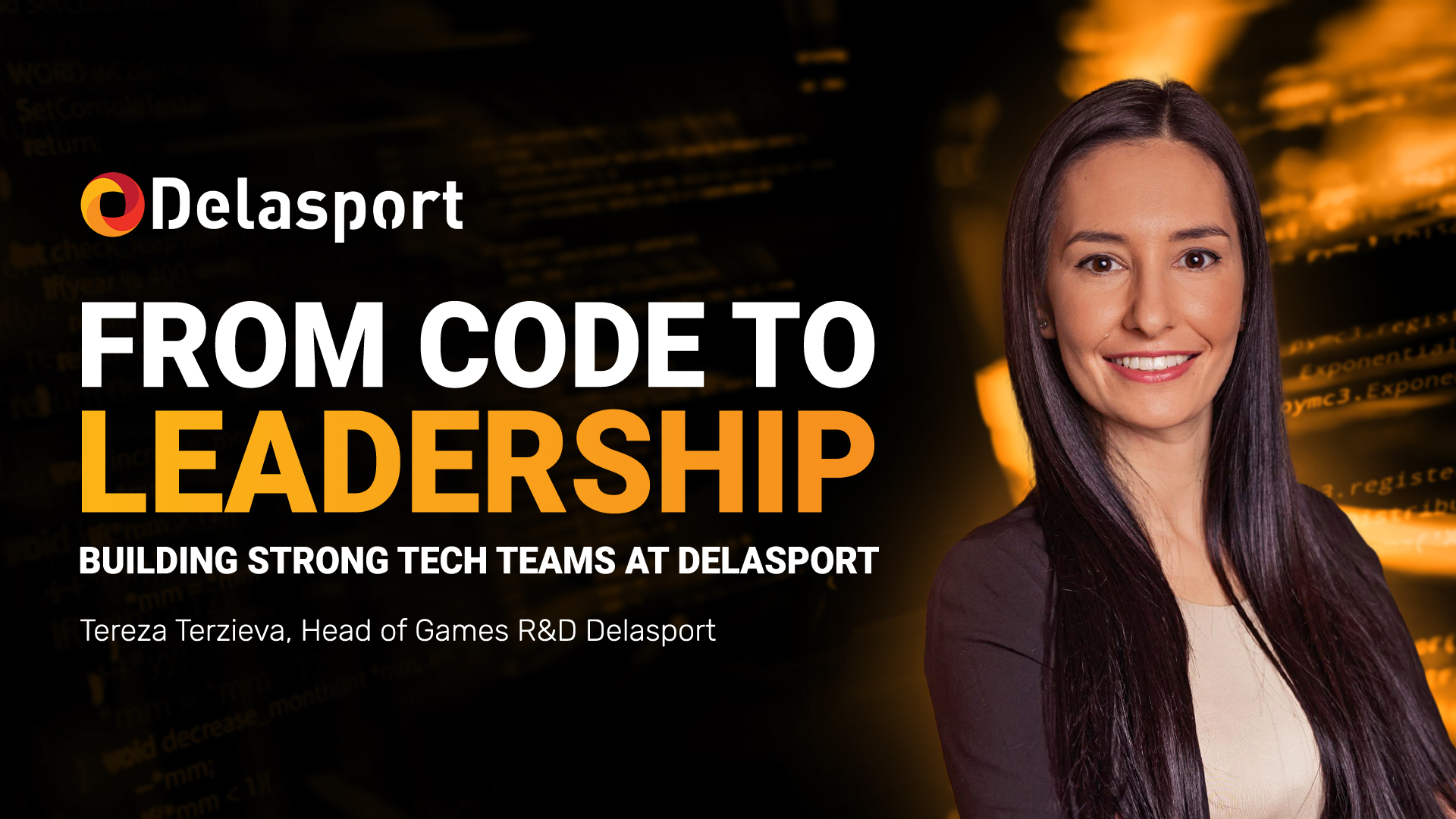
Today, we introduce you to Tereza Terzieva, Head of Games R&D, who has been part of Delasport for nearly five years. With a strong background in software development and a career path shaped from an early age, Tereza is one of the standout leaders within the company.
In an environment where technical roles have traditionally been dominated by men, Tereza successfully leads the only team at Delasport fully dedicated to casino development. She passionately believes that true success comes from working with ownership and responsibility - treating what you build as your own and always aiming for long-term solutions.
In the following interview, Tereza shares more about her professional journey and her approach to leading technical teams.
My technical background keeps me grounded. Having a deep understanding of the technologies and components we work with helps me fully grasp the real tools the team uses and the challenges they face on a daily basis. As a result, my decisions are never abstract - they are rooted in practice and reality.
Equally important, this background has shaped the way I think. I have always been drawn to complex problems and finding solutions - not only by writing code, but also in managing people and projects. Every situation requires a different approach, balance, and long-term thinking. For me, leadership emerges precisely there - in understanding context, supporting people, and taking responsibility for the product. This mindset naturally led me from development into management and continues to define how I lead my team today.
For a long time, my path was purely technical rather than managerial. Logic and unsolvable problems were always my passion, and I never imagined myself stepping into a leadership role. Over time, however, I realized that this very passion helps me in management as well.
It teaches me to consider many different factors, to be patient, and to approach complex situations calmly. In the end, people management also involves “problems to solve” - the difference is that the solutions require more attention, understanding, and balance.
Yes - and honestly, I liked it. Challenges motivate me. I have never seen this as an obstacle. I have been surrounded by mostly male company since childhood, which helped me become direct, confident, and calm in such environments.
I combine determination and drive with patience and empathy. This balance helps me build trust and work effectively with the people around me.
For me, the difference lies in attitude and example. A good manager oversees processes and tasks. A true leader creates an environment where people want to give their best.
Leadership means walking alongside your team. When challenges arise - you face them together. When success comes - you give credit to those who achieved it. Trust is the foundation of everything, and when it exists, the team becomes resilient and united.
My greatest achievement is that my team is strong, cohesive, and stable - people enjoy coming to work and they choose to stay.
In practice, compromises are often necessary for several reasons. What matters to me is that decisions are informed and well thought out. This means gathering enough information, listening to different perspectives, and evaluating the long-term impact.
I do not believe it is a weakness to consult more experienced colleagues - on the contrary, it shows maturity and responsibility. When we work as one, we can find the best possible balance between technology and business.
Balance comes through clear role distribution and constant communication. More experienced colleagues could share knowledge and mentor others, while newer team members receive support and space to grow.
It is important that everyone has time for focused work as well as collaboration. When people complement and support one another, the team grows naturally.
I believe people stay where they feel part of something meaningful. Our team is built on support, open communication, and a clear development direction. People see purpose in what they do and know they have room to grow.
That is when staying becomes a natural choice, not just a decision.
I rely on consistency and transparency. We have daily meetings where we discuss tasks, challenges, and solutions. Communication happens on shared channels, so everyone has access and clarity.
We also work on common initiatives, which help us stay connected and maintain a powerful sense of being one team - even when we are not in the same location.
I would advise them not to rush into proving themselves as leaders. In my experience, that rarely works and can even push people away.
Leadership is built through actions, not titles - through how you communicate, make decisions, and show your team they can rely on you. It is important to stay close to the team and to the real work - to understand the challenges people face and where support is needed.
Share your knowledge instead of keeping it to yourself and lead by example. Trust is built through dedication, time, consistency, and honesty. When people feel that there is no need to impose authority, leadership happens naturally.