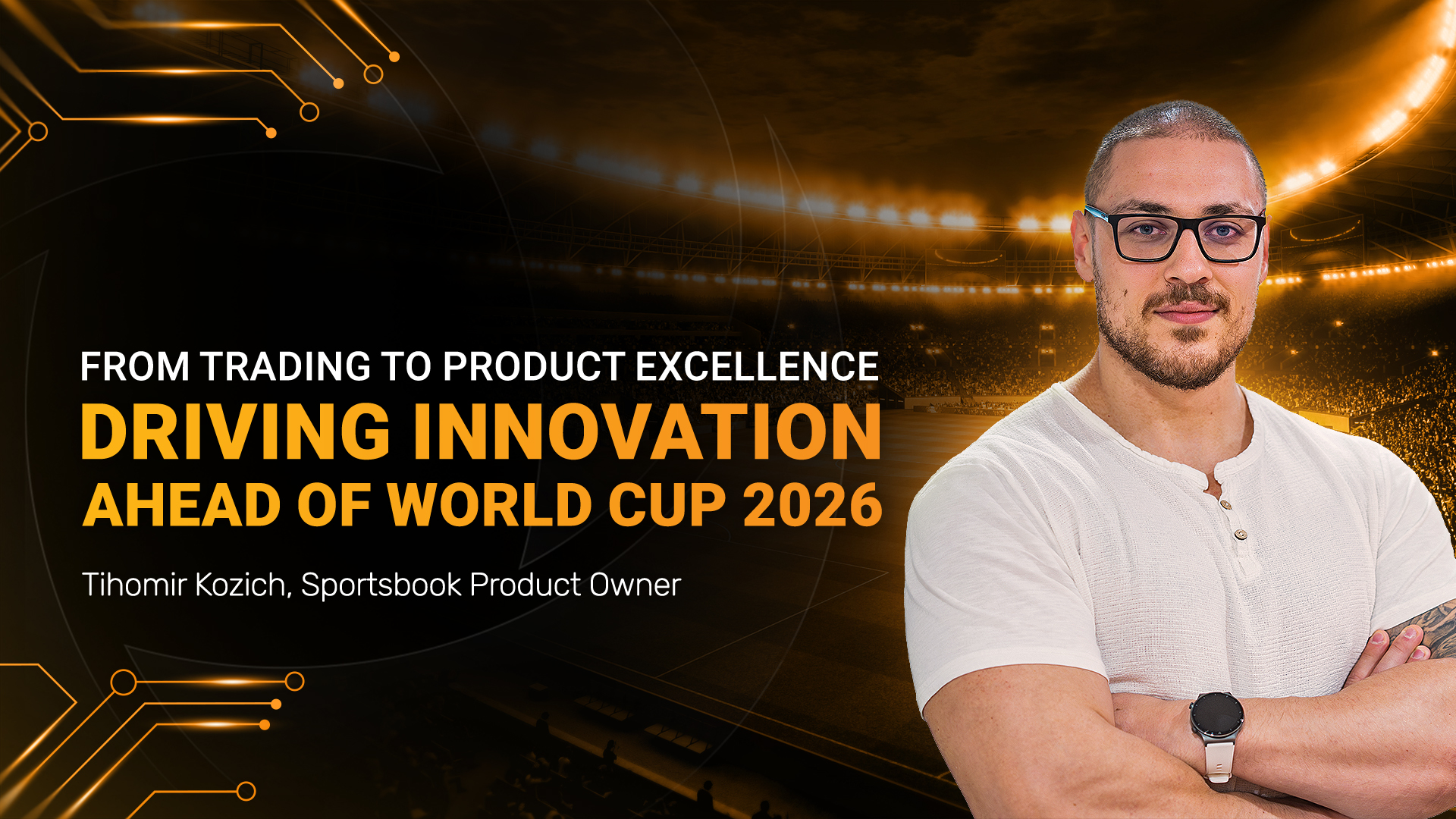
Major football tournaments have evolved into more than just global sporting spectacles - they are pivotal moments that reshape the sports betting industry. Each World Cup and European Championship drives massive shifts in player behavior, accelerates market growth, and challenges operators to turn short-term spikes into long-term value.
At their core, the FIFA World Cup and UEFA European Championship operate as two distinct engines of growth. The World Cup delivers unmatched global scale, attracting billions of viewers and driving explosive acquisition across both established and emerging markets. It is a moment of peak visibility, where casual and new bettors enter the ecosystem in large numbers.
In contrast, the Euros offer a different kind of advantage. With a more concentrated European audience, they generate lower overall volume but significantly higher efficiency. These markets are more mature, with players already familiar with advanced betting formats, leading to deeper engagement and stronger monetization.
Understanding this distinction is critical. The World Cup is driven by reach and acquisition. The Euros are driven by product depth and efficiency.
Despite these differences, both tournaments highlight a fundamental shift in modern sports betting: the dominance of live engagement.
Today, betting is no longer centered around pre-match activity. Instead, the majority of action happens in-play, as users respond in real time to what unfolds on the pitch. Key moments - goals, penalties, red cards, VAR decisions, and the final minutes of a match - trigger immediate spikes in betting activity. These are the moments when engagement peaks and where operators generate the highest turnover.
This evolution has redefined expectations. Bettors now demand instant odds updates, seamless interfaces, and the ability to act quickly as the game changes. For operators, this means that performance during these high-intensity moments is critical. Platforms must be optimized not for steady traffic, but for sudden surges driven by live events.
Alongside this shift in behavior, major tournaments continue to be the industry’s most powerful acquisition drivers. During global events, new registrations, deposits, and reactivations all increase significantly as attention converges around football. However, this surge comes with a well-known challenge: the post-tournament drop-off.
Once the final whistle blows, engagement often declines sharply. Many operators succeed in capturing traffic but struggle to retain it. This creates a gap between short-term volume and long-term value - one of the most persistent challenges in the industry.
To address this, leading operators are rethinking their approach. Instead of viewing tournaments as isolated peaks, they are treating them as entry points into a broader player lifecycle.
Marketing plays an important role in this strategy. During the World Cup, acquisition-focused campaigns - such as welcome bonuses, odds boosts, and accumulator promotions - are highly effective in capturing new demand. During the Euros, where player bases are more established, CRM-driven strategies become more prominent, focusing on reactivation, loyalty, and repeat engagement.
But marketing alone cannot solve the retention challenge. The real differentiator lies in product experience.
One of the key issues across sportsbooks today is fragmentation. Live betting often consists of numerous micro-markets that are disconnected from one another, making it difficult for users to stay engaged throughout the full match experience. At the same time, complex interfaces can overwhelm casual players, leading to early drop-off.
The next phase of industry evolution is about simplifying the experience while increasing engagement depth. Operators must create environments that are intuitive, immersive, and capable of sustaining attention beyond individual betting moments.
Looking ahead, the FIFA World Cup 2026 is set to amplify all of these dynamics. With an expanded format of 48 teams and 104 matches, it will be the largest tournament in history. This expansion will significantly increase the number of betting opportunities, extend engagement windows, and introduce new peak moments across different time zones.
At the same time, structural factors such as the rapid growth of the U.S. market, increased mobile adoption, and the continued evolution of betting products will drive even higher global volumes. Formats such as Bet Builders, player props, and micro-betting markets are expected to play an even bigger role, increasing both betting frequency and session depth.
However, greater scale also brings greater competition.
The operators that succeed in this new environment will be those that can excel across three key areas: maximizing live engagement, monetizing high-value betting formats, and converting acquisition into long-term retention. Without a clear lifecycle strategy, even record-breaking tournaments will fail to deliver sustained growth.
This is where advanced sportsbook technology becomes the true competitive edge.
Modern platforms must go beyond traditional betting. They need to create cohesive, engaging ecosystems that connect every stage of the player journey - from discovery and onboarding to live interaction and post-event retention.
Delasport’s approach is built around this philosophy. Solutions like the Tournaments Hub simplify the betting journey by centralizing all tournament-related content into one intuitive interface, making it easier for players to discover, engage, and place bets. At the same time, innovations such as SuperPot introduce jackpot-style mechanics that encourage repeat participation, while Betiator transforms live sports moments into interactive, high-frequency gameplay experiences.
Complementing this, Delasport’s Player Engagement Suite and advanced CRM tools enable operators to extend the lifecycle of every user through missions, rewards, personalized campaigns, and retention-focused mechanics. Together, these solutions create a unified experience that keeps players active not only during peak tournament moments, but long after the event ends.
Because in today’s market, success is not defined by how much traffic you generate during a tournament - but by how effectively you retain and engage those players afterward.
Major tournaments create opportunity.
The real advantage lies in turning that opportunity into sustained growth.
Read the full Market Intelligence Report to explore the data, insights, and strategies shaping the next generation of sports betting.